School on the Beach: learning that sticks
If you try to teach a 13-year-old about coral reefs using only a blackboard, good luck.
You’ll get polite nods, maybe a yawn, and about five minutes later… gone. Evaporated.
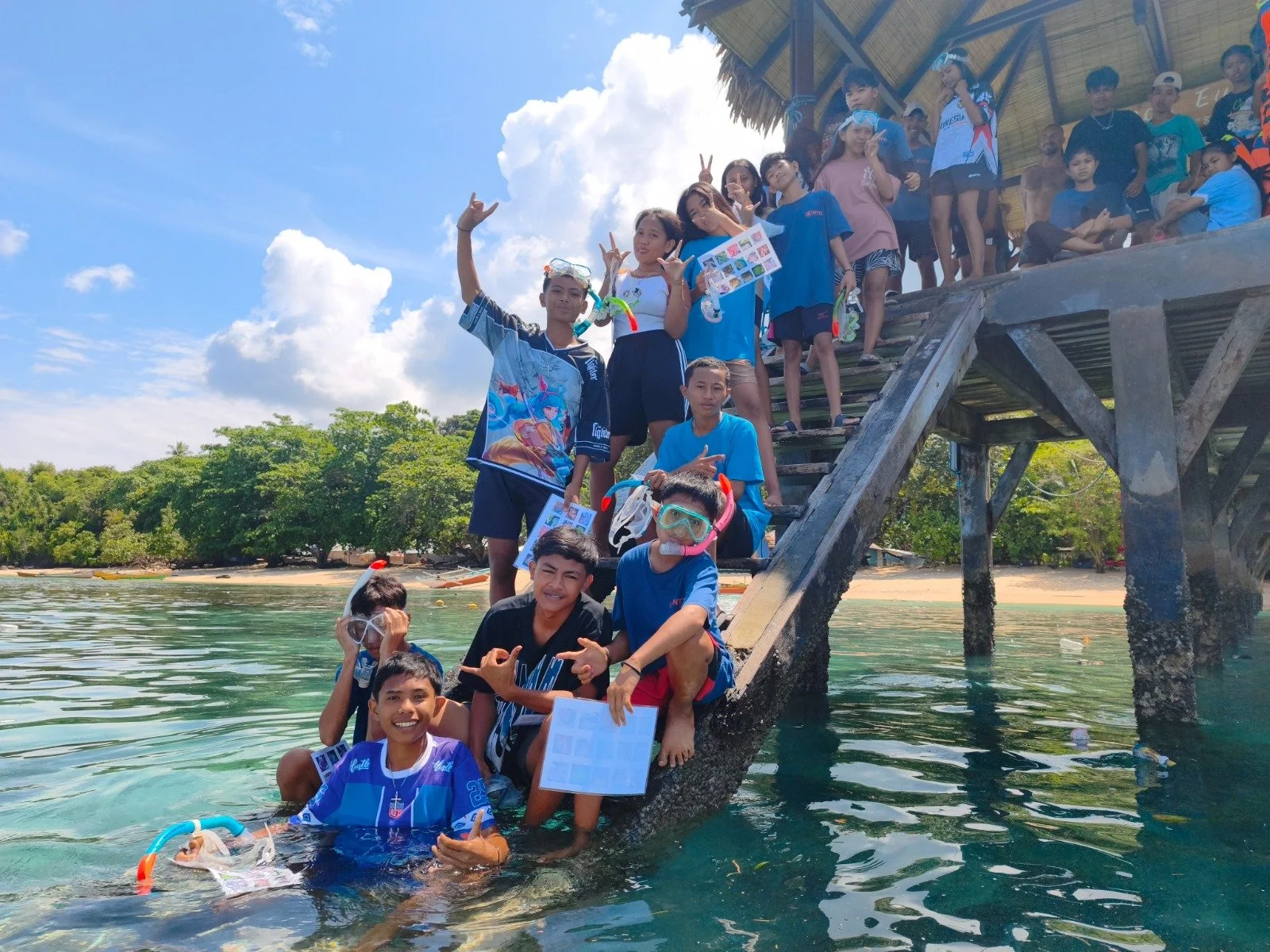
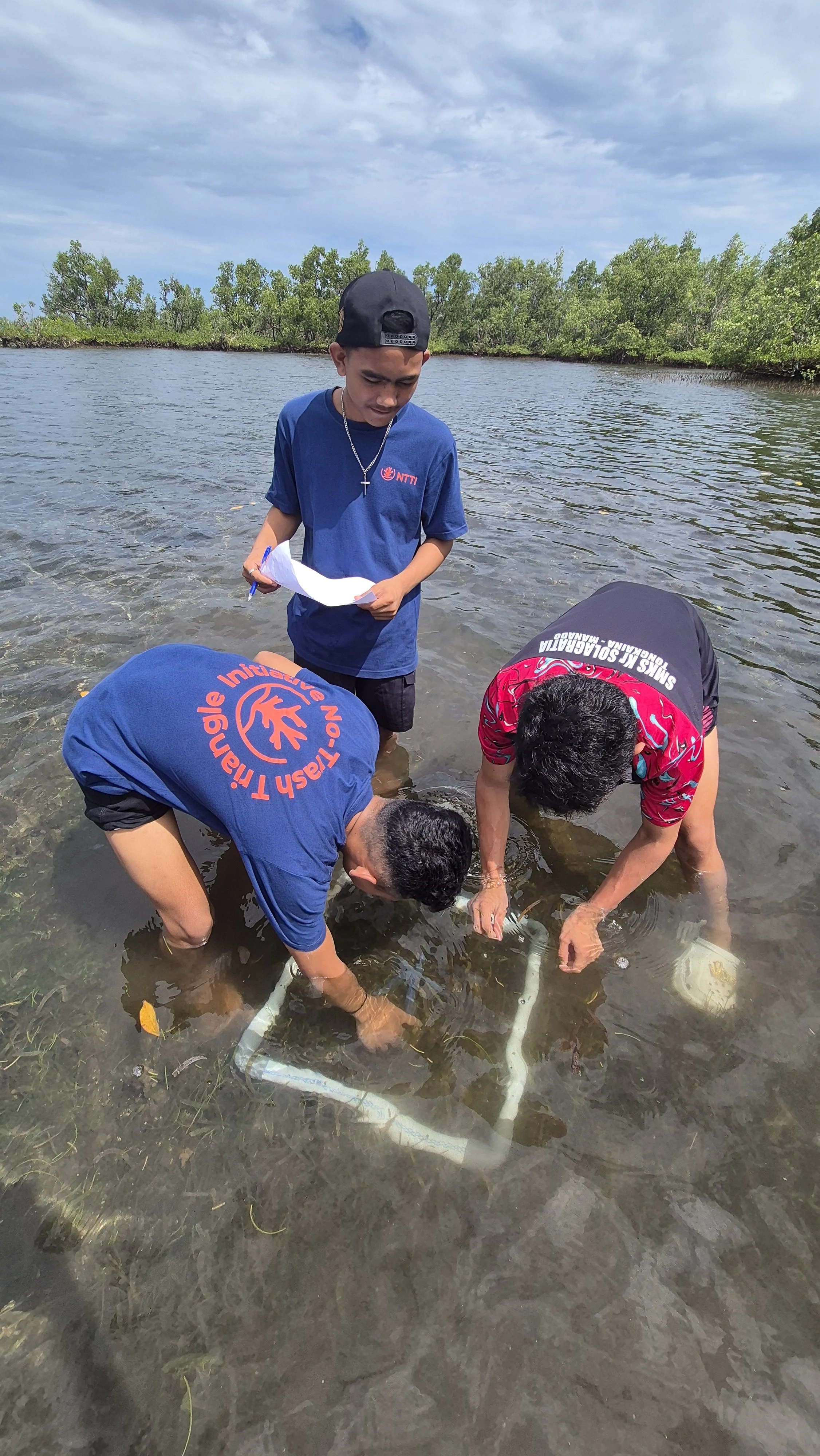
Now take that same kid, put them waist-deep in the ocean, hand them a mask, point at a living coral colony.
Different story.
There’s a reason this works, and it’s not just intuition.
Educational research has been saying this for decades. Think Experiential Learning, the idea that we learn best by doing, reflecting, and applying.
Once you’ve seen it, touched it, asked questions about it, you don’t need to “study” it anymore. It’s yours.
In the communities we work with in North Sulawesi, time is limited, often short. Many of these kids might not continue their education beyond junior high. Some will start working early (fishing with their families, helping in resorts, assisting as dive guides), a few will go further in school.
Many won’t.
So we don’t have the luxury of long, slow, theoretical education pipelines. Which means if we want something to land, it has to land fast, and stay.
What School On The Beach actually looks like
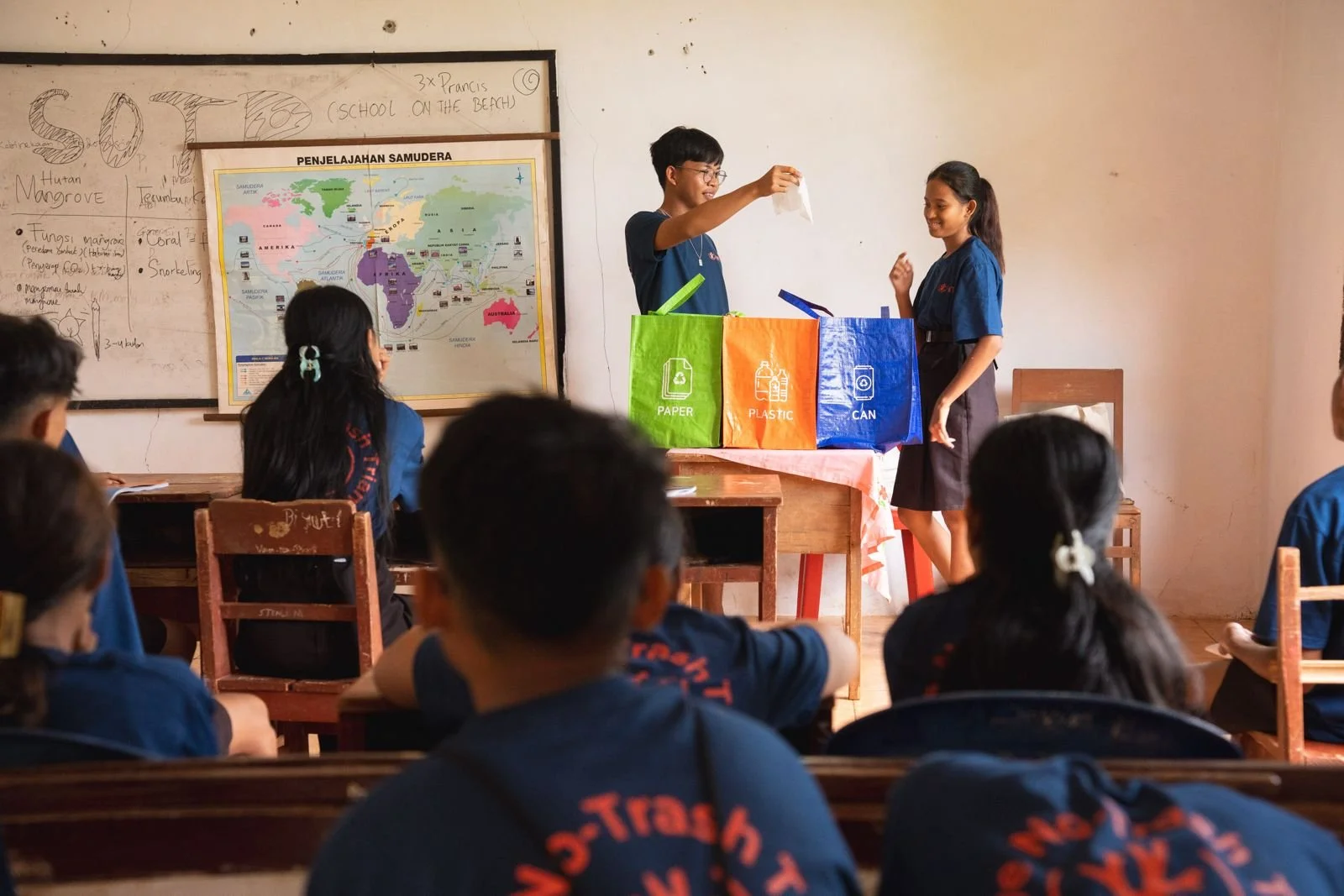
- Snorkeling sessions where students see reef ecosystems.
- Beach clean-ups where they witness the impact of plastic pollution.
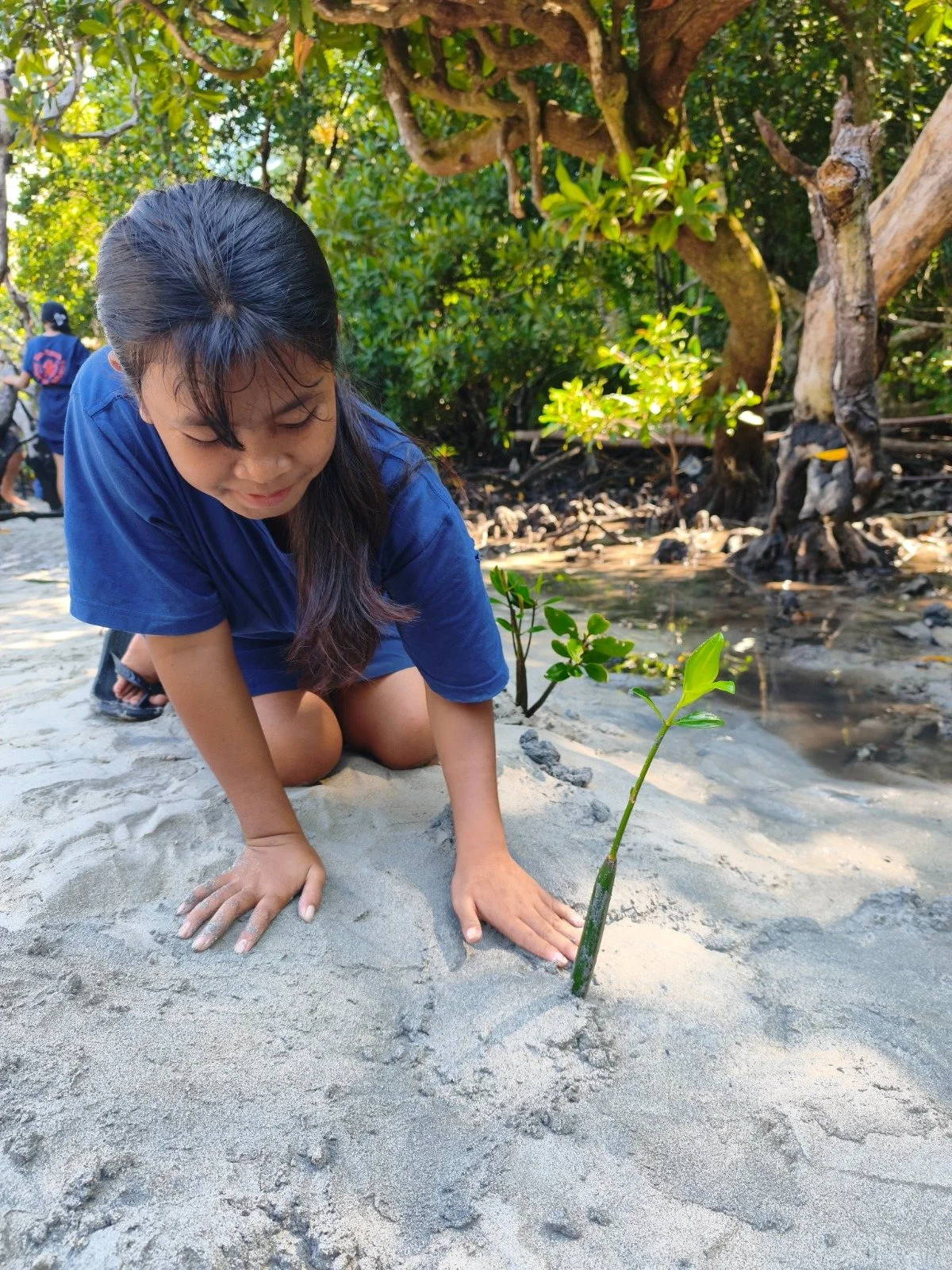
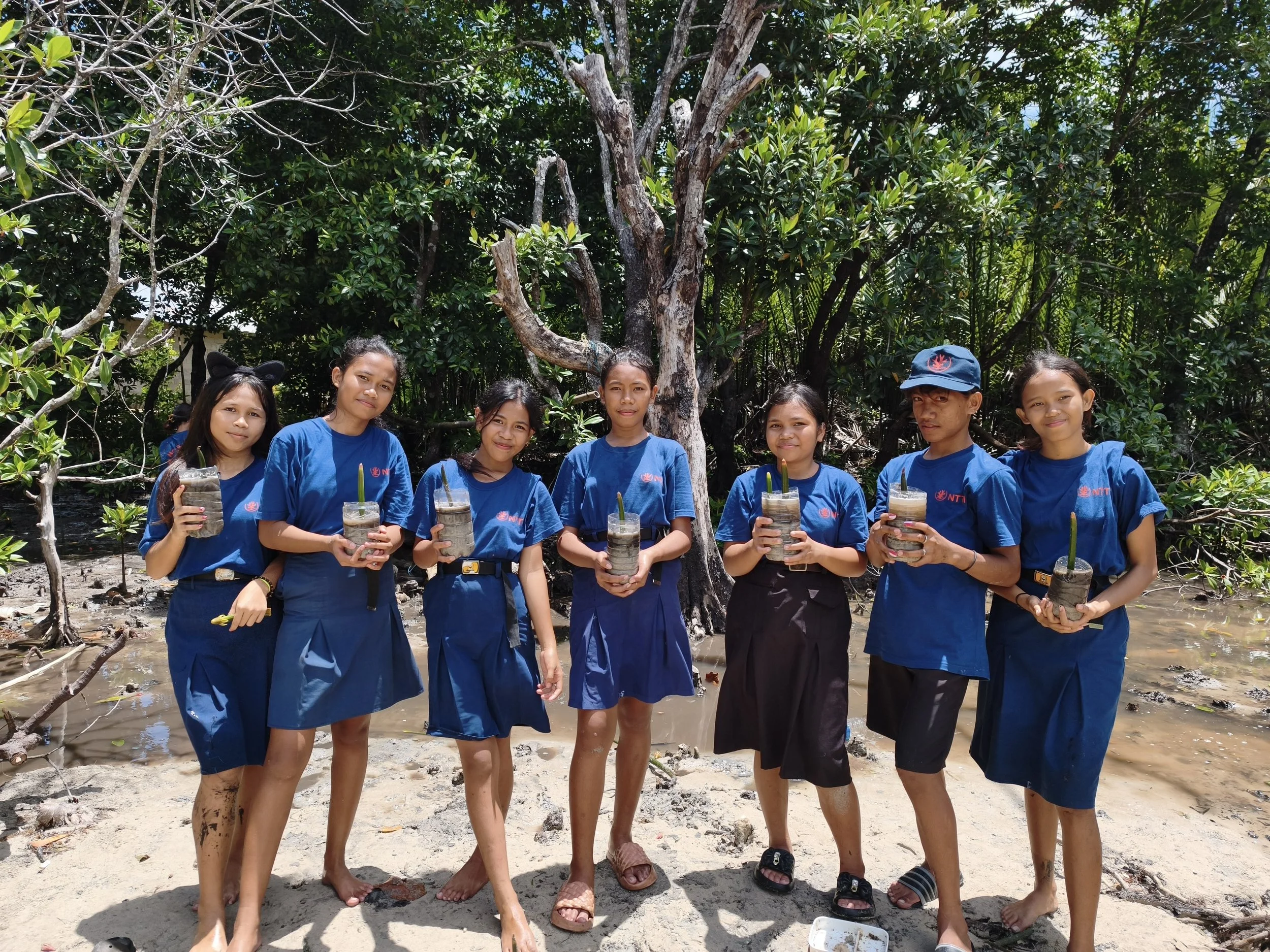
- Planting mangrove seeds by hand and watching them take root over time.
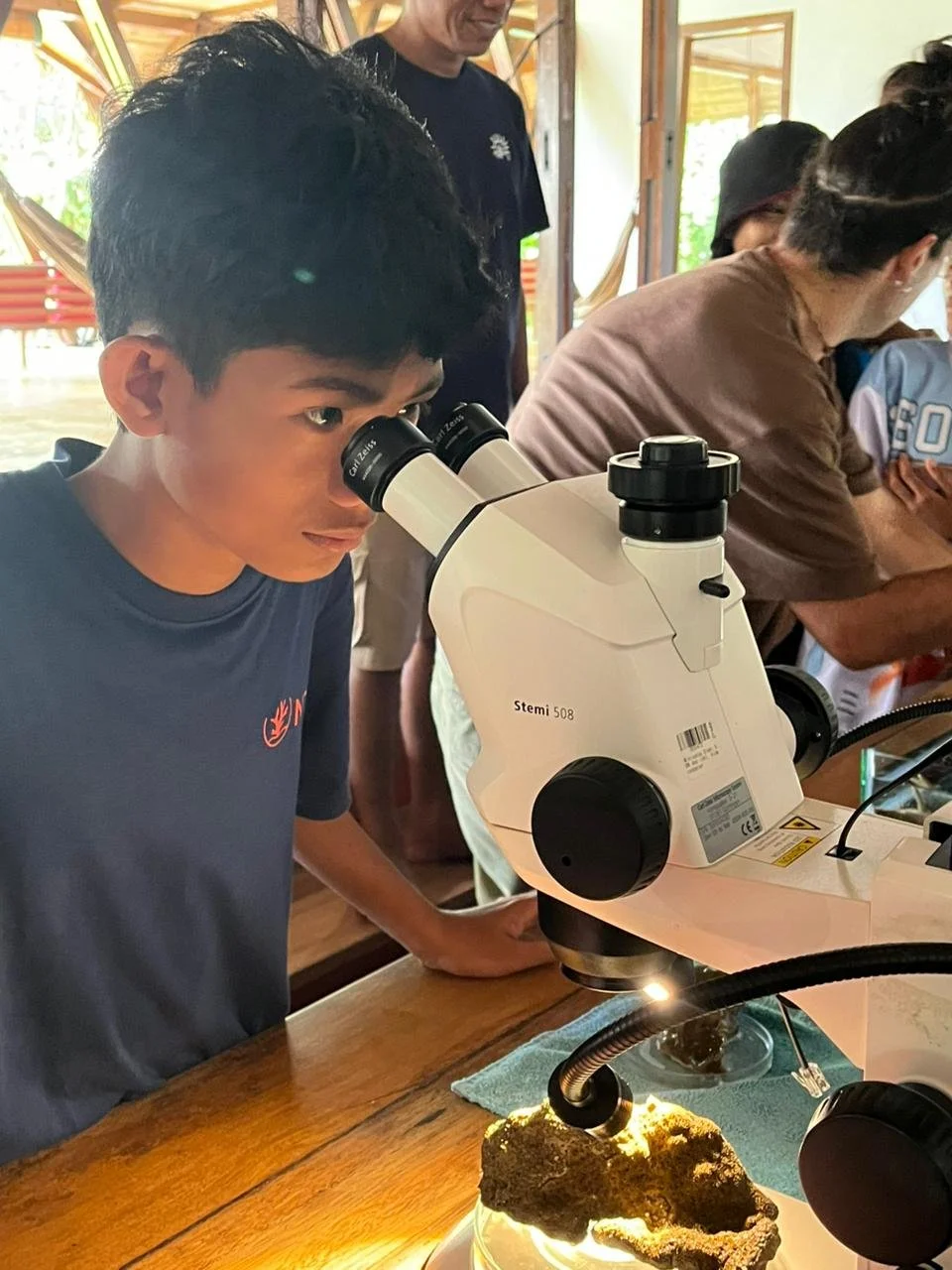
- Simple experiments that turn abstract ideas into visible results.
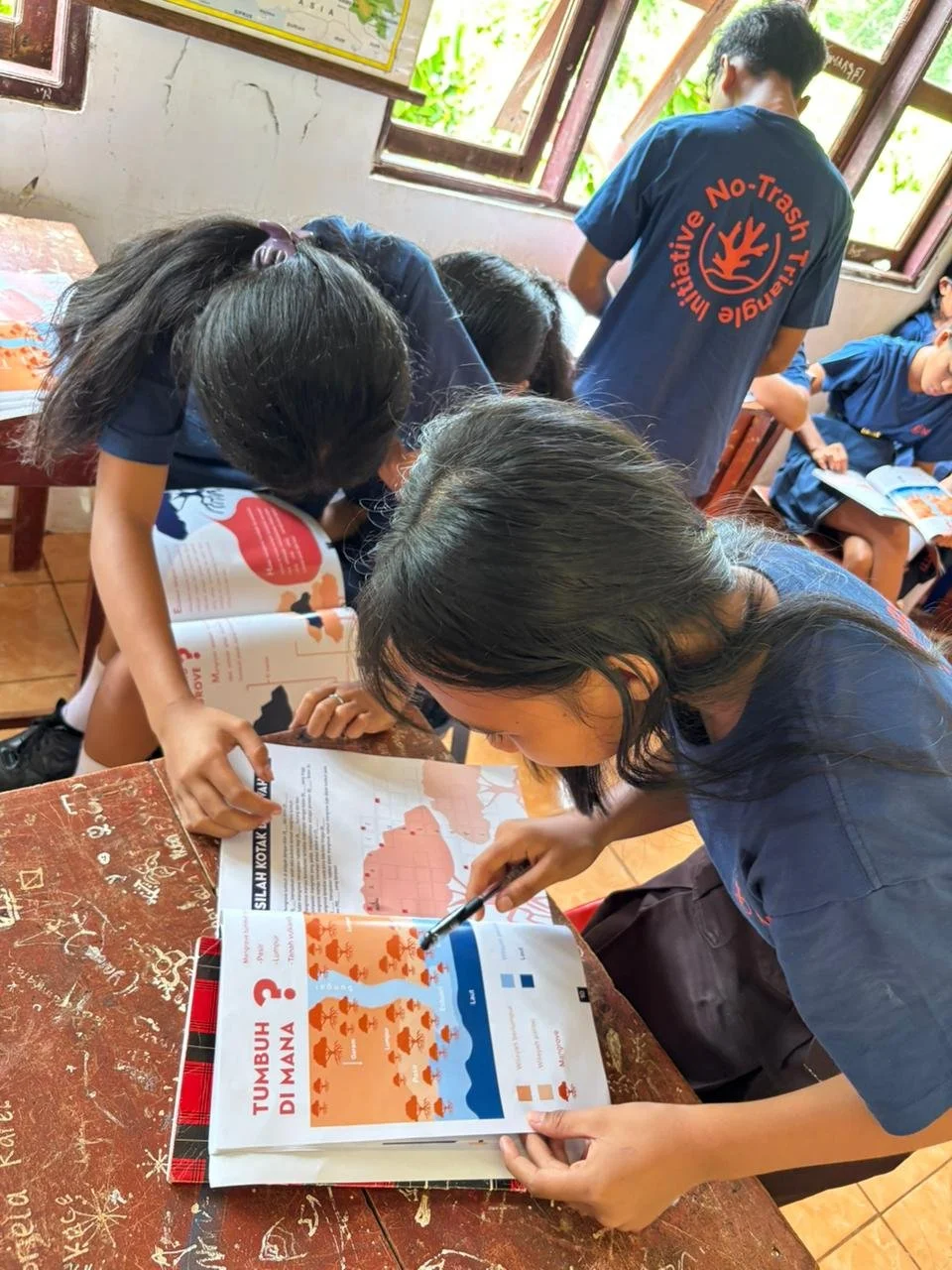
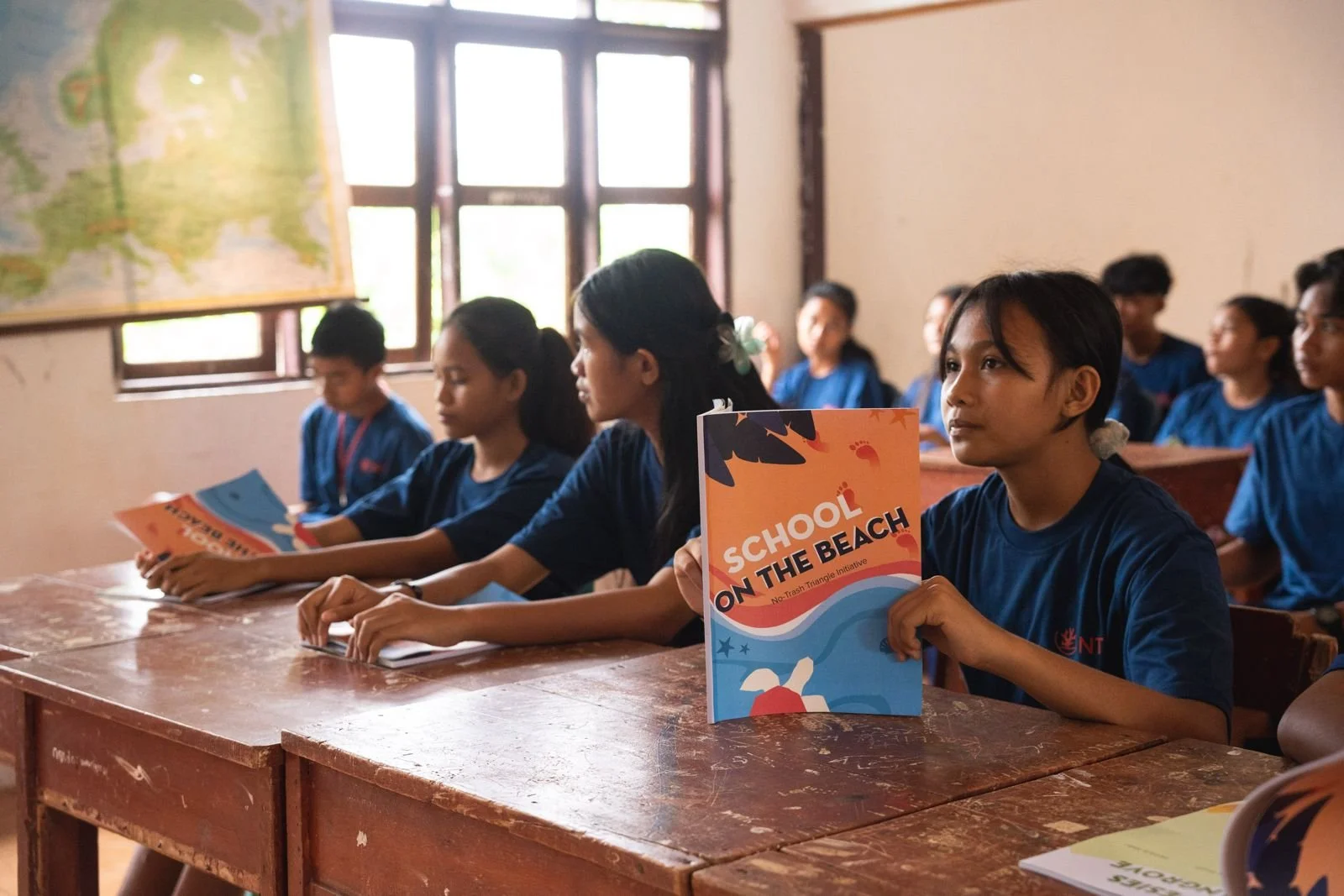
Twelve lessons built around hands-on activities that beat the “sit down and listen” method.
What started as a small, almost improvised initiative has grown.
Today, our School On The Beach runs across five schools on different islands.
It’s still an extracurricular program, which means something important: kids show up because they want to.
The real impact doesn’t show up immediately.
Not after the first year, not even after the second.
But around year three, you start noticing small things:
students sending us WhatsApp messages because their beach is covered in plastic and they feel the urgency to clean it before high tide;
someone teaching their parents to put waste in the bin
kids bringing plastic waste to school because they know we will collect it
someone choosing a tote bag over a plastic one.
Nothing dramatic.
Just small seeds, quietly doing their job.
Keeping it alive
Programs like this don’t run on good intentions alone.
So far, we’ve been lucky: there’s always been someone willing to step in and support. But short-term funding is exactly that: short-term.
That’s why partnerships matter. One of the most meaningful ones is with Ultima Frontera, which has committed to donating a portion of its Indonesia travel revenue to support the School On The Beach program.
It’s a simple mechanism. And a powerful one.
And what’s next?
We’re not done, not even close. There are more schools, more islands, more kids who haven’t had the chance to see (really see!) what’s in front of them.
If you believe in this approach, if you want to be part of something that actually sticks, we’re open to any kind of support to help us reach them.
Because this doesn’t stop here. And honestly, we don’t plan to slow down anytime soon.